
The Plate Trick That Cuts Portions by 30% (Without You Noticing)
Learn the science behind the Delboeuf illusion and simple portion control strategies that actually work.
Tomas Mitkus
2/13/20264 min read

Your brain is lying to you every single time you serve dinner.
Not in a dramatic way. Just a quiet, persistent lie about how much food is on your plate.
This lie is costing you progress. And I can prove it.
Take a look at these images. The inner circles are identical in size. Your brain says otherwise.
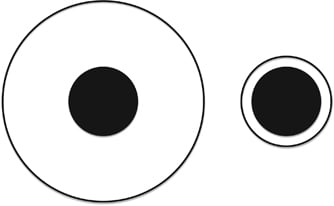
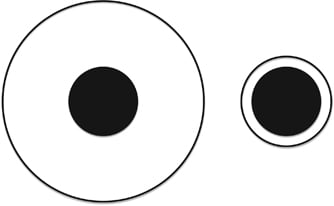
This is the Delboeuf illusion, discovered in 1865 by Belgian psychologist Joseph Delboeuf. It is why portion control feels so bloody hard, even when you are trying.
Here's the thing: You can use this illusion to your advantage.
The Single Most Effective Portion Control Strategy
The single most effective and scientifically proven method to reduce portion sizes is to reduce the size of the plate.
I know. Sounds too simple to work.
But researchers examined 56 different studies. Food types ranging from snack foods to ice cream to vegetables. Settings from controlled laboratories to natural buffets. Different plate types, different portion sizes, different populations.
The finding was consistent: halving the plate size led to a 30% reduction in amount of food consumed on average.
Not 30% less served. Thirty percent less eaten.
Think about that. If you are eating 2,000 calories a day and switch to smaller plates, you could be looking at 600 fewer calories consumed without a single conscious decision about restriction.
The mechanism is simple. When you reduce a plate's diameter by 30%, you halve the area of the plate. Your brain sees a full plate and registers satisfaction. Meanwhile, you have consumed significantly less.
But it gets better. Plates with wider or coloured rims amplify the effect. They make identical servings appear up to 10% larger compared to plates with narrow or no rims.
Your kitchen cupboards might be sabotaging your progress, and you did not even know it.
The Research Behind the Delboeuf Illusion and Plate Size
The definitive work comes from Holden, Zlatevska, and Dubelaar in 2016, published in the Journal of the Association for Consumer Research.
They conducted a meta-analysis called "Whether Smaller Plates Reduce Consumption Depends on Who's Serving and Who's Looking."
The researchers collated 56 previous studies examining whether smaller plates reduce consumption across a massive variety of conditions. Snack foods, popcorn, ice cream, breakfast cereal, rice, vegetables, fruit. Bowls versus plates. Fixed portions versus self-served portions. Food laboratories versus buffets.
Combining all studies showed that halving plate size led to a 30% reduction in consumption on average.
But two critical factors amplify effectiveness.
First, smaller plates work best when diners self-serve their portions. When you serve yourself using smaller plates, you serve less and eat less. The effect disappears when someone else is doing the serving.
Second, the effect is strongest when consumers are unaware their consumption is being monitored. The moment people realise they are being watched, they override the visual cue. Their conscious mind takes over.
This explains why so many laboratory studies failed to find an effect. People in labs know they are being studied. People at home do not.
The practical application is obvious. Simply switching to smaller plates at home can help reduce how much you serve yourself and how much you eat. No willpower. No conscious restriction. Just environmental design working for you instead of against you.
The research is clear: Your kitchen setup matters more than your motivation.
How to Use Smaller Plates for Portion Control
Start by assessing your current plates.
Are they conducive to healthy portion sizes, or are they working against you?
Measure the diameter. If your dinner plates are 30 centimetres or larger, they are likely contributing to overconsumption.
You have two options. Use the smaller plates you already own (salad plates instead of dinner plates), or invest in new plates with wider, coloured rims that create the illusion of larger portions.
This is not about deprivation. It is about leveraging visual perception to support your goals.
Plate Size Is Only Half the Equation
Plate size is half of the equation. The other half is what's on it.
Understanding macronutrients is crucial to building a plate that supports satiety and metabolic health.
Your plate should contain three macronutrients: protein, carbohydrates, and fat.
Protein triggers the release of peptide YY and GLP-1, hormones that signal fullness to your brain. It also has the highest thermic effect, meaning your body burns more calories digesting it. This is why protein keeps you satisfied longer.
Carbohydrates provide glucose, your brain's preferred fuel. They trigger insulin release, which helps shuttle nutrients into cells. The key is choosing carbohydrates that digest slowly and keep blood sugar stable.
Fat slows gastric emptying. Food stays in your stomach longer, which extends feelings of fullness. Fat also triggers the release of cholecystokinin, another satiety hormone.
When you combine adequate protein, smart carbohydrates, and healthy fats on a smaller plate with a wider rim, you create a powerful environment for portion control.
Environment Beats Willpower Every Time
If you have been relying on willpower to control portions, you have been fighting an uphill battle.
Environment beats willpower every single time.
Start with your plates. The research does not lie.
When was the last time you questioned whether your kitchen was set up to support your goals or sabotage them?